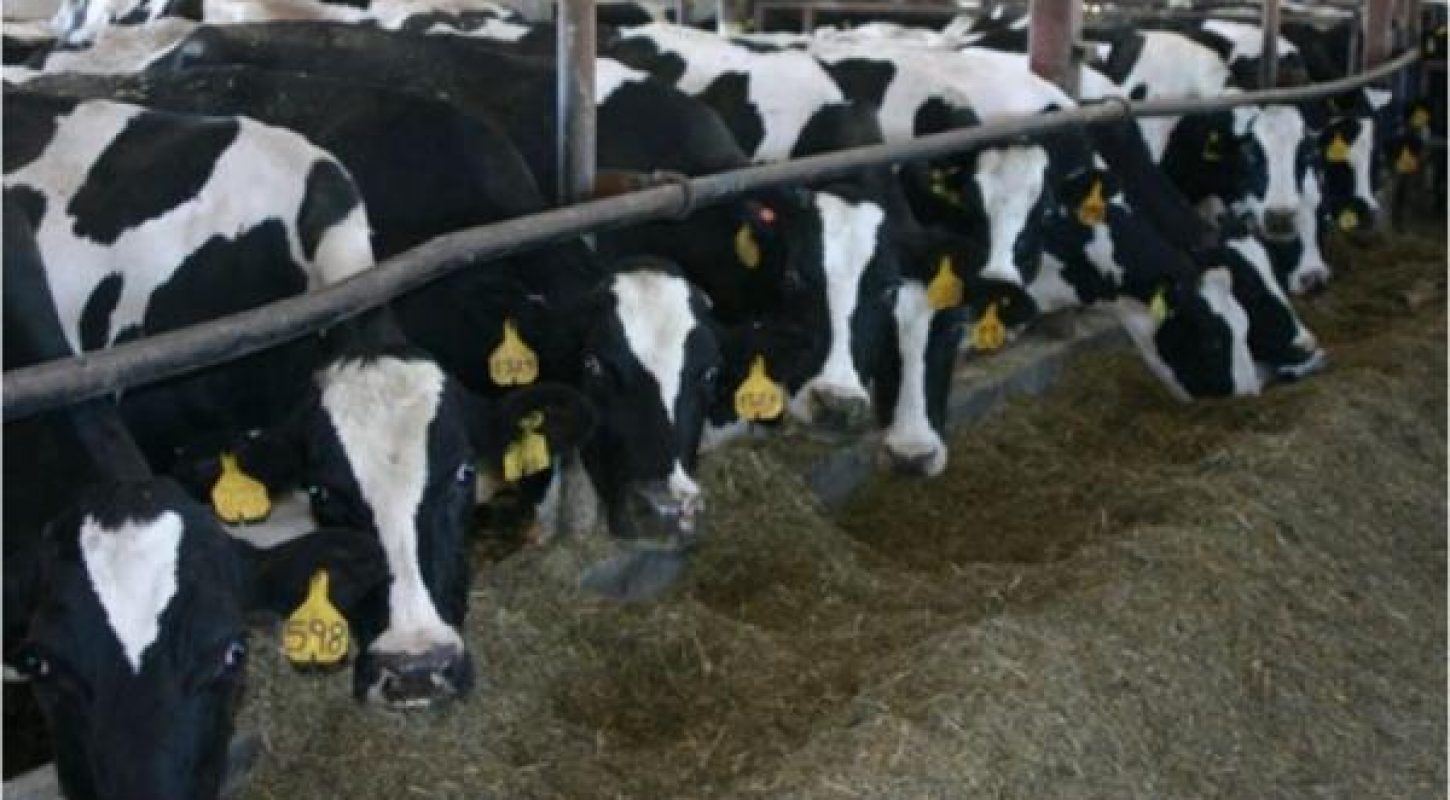
Organic Dairy

Unfortunately, the dairy industry’s answer to complaints about treatment of dairy cows and the quality of regular dairy products is to offer “organic” products that are actually produced just like regular dairy.

According to Change.org, big agriculture has moved in on the organic dairy market, and these big companies don’t always follow the rules. Not only are factory-style organic dairy farms threatening smaller farmers, they have a track record of violating laws concerning organic dairies, while lobbying for looser enforcement of these laws. Aurora Dairy/Horizon Organic (owned by Dean Foods) is one large, organic-certified farm that got caught violating 14 organic dairy laws, including confining their animals and denying them grazing. The Bush administration's punishment for Aurora Dairy’s violations was a mild one year probation.

Organic dairy regulations require farmers to comply by rules such as:

  • All feed must be organic
  • Animals must have unrestricted access to pasture
  • No antibiotics or hormones are allowed, with the exception that sick animals must be treated as needed and removed from the herd

These regulations reduce but do not eliminate the cruelty involved in dairy production. Here is some information Farm Sanctuary gave to me about why most organic dairy is far from cruelty-free:
 
“Cow's milk can never be obtained without immense cruelty. Dairy cows are forcibly impregnated on what the industry calls the "rape rack" every year. Immediately after giving birth, the mother cow has her calf dragged away from her so that he or she does not drink her milk. The mother cow shows clear signs of mourning her loss including bellowing, hiding in dark places, not eating or drinking, pacing, and more. If the calf is male, he is immediately chained by the neck in a 2-ft wide crate, so small that he can't turn around, stretch his limbs, or lie down comfortably. There he spends his entire short life being fed an anemic diet, just to be slaughtered at only a few months of age for veal. If the calf is female, she is raised to be a dairy cow like her mother.
 
Immediately after losing her baby, the mother cow is hooked up to metal milk machines 3 times a day and forced to produce ten times more milk each day than she would in nature. Just 2 to 3 months after giving birth, she is re-impregnated. While in nature a cow would live to 20 years, cows on modern farms are slaughtered at just 3 or 4 years of age to become cheap hamburger meat. More information about the routine abuses of the dairy industry is available at the Farm Sanctuary website.
 
In addition, the standards regulating the treatment of "organic" dairies are extremely weak and many animal protection, consumer advocacy, environmental protection, and public health organizations have argued that the animals in large organic farms face the same conditions as those on non-organic factory farms. Investigations at farms owned by some of the largest organic dairy companies like Horizon Organic have verified this. More information about the truth behind “organic” and other “humane” food labels is available in this article.”

 
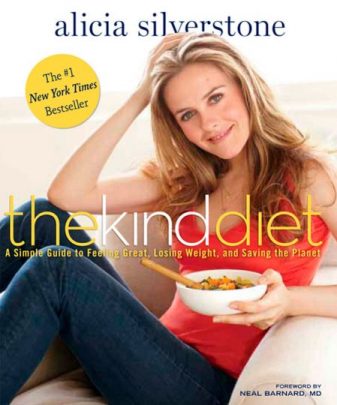
On top of this, we know that cow’s milk, organic or not, is unhealthy for humans! Even if you know where your dairy comes from, and think that it is cruelty-free, there are many reasons why dairy consumption is unhealthy. Many people have trouble digesting cow's milk, and consumption of dairy has been linked to obesity and cancer. In chapter 3 of The Kind Diet, I discuss the health problems associated with consuming dairy in more detail. Buying yummy milk alternatives like soy, rice, cashew, almond, hemp, hazelnut, coconut, or oat milk, is the best way to avoid the immense cruelty involved in the dairy industry. There are so many options with varied flavors, health benefits, and price points, you won’t miss dairy once you kick the habit of consuming it.

To fight against big agriculture's lobbyists, and help to strengthen organic dairy standards you can go here. Again, I do not recommend consuming dairy at all, but in a world where many people do, we want to make sure dairy cows are treated as well as possible.
  • Share
  • Categories: health , animals

I've been drinking Almond Milk for years. My constant nasal drip immediately cleared. I tried hemp milk and didn't like it. Tried soy milk and didn't like it, but almond milk is the BEST!

I just quit cheese and all other dairy (1 week in). So far so good!

This is why Raw Vegan is Loving, inspiring, caring, gorgeaus and almost tooo yummie! At www.Earthsprout.org I share my food tricks.. Btw, what are your tips för a non dairy diet? Thinking mostly of yoghurt..:)

I have to agree with the person commenting about the anger in this thread, I know I'm several months behind most of the posts, the article just showed up in my facebook thread today but wanted to a say a few things anyway. 

So you know where I'm coming from, I have no expericence of the US farming industry, I'm Irish living in Wales, and I'm working towards dairy free but not there yet, I have gone veggie. 

You can't expect to write about companies and industries and use sensational words like "rape rack" and not expect them to respond. They have the right to say their bit even if this is a vegan website. Yes Alicia researches her posts, no she doesn't know everything. And the farmers wife was just trying to point out a few things she did not deserve to be personally attacked, her points yes, her no. One of the things I most liked about Alicias book was when she said how she treats people she meets wearing fur nowadays (can't find the page), she doesn't go all preachy on them  she said she awknowledges it and then moves on, giving them info if they ask for it, she realised preachy doesn't work. And she's right!

As for the argument that it isn't natural to drink another animals milk, there is a lot of stuff we do that isn't natural, we take vitamins tablets because they are the fastest way to get what we need, we take medicine ground into tablets with bits of rock and all sorts of stuff because it is the fastest most efficient way to get better. Before I get attacked, I'm not saying milk is good for us, I'm saying give the facts of why, don't just say cause it's not natural, you loose a lot of listeners with comments like that. 

If you want to get people to go vegan, which obviously you do, show them the facts, they don't need to sensationalised and give them the alternatives, you wont make anyone change by attacking them, they'll dig their heels in. 

Hi, Friends. As a nursing mother I take this post very seriously and I often sit depressed thinking about how cows are treated in the process as I breastfeed my child, enamored with the bonding that it creates.

In times past, I have had recurrent bouts of mastitis which had to be treated with antibiotics. I have heard that cows, since they are overproducing milk to meet the needs of dairy farmers, frequently also get mastitis. I cannot even tell you the pain associated with this, having experienced this myself multiple times. It produces flu-like symptoms and the breast is so, so painful. I believe this is where the concern for antibiotics in milk stems from. :( 

My question is, and I REALLY HOPE SOMEONE CAN HELP ME, is that my kids drink milk post-nursing (please no flames. I live in a diverse household, foodwise). I really don't like the idea of this, but it seems to be the widely accepted practice among my children's pediatric office.

Are there alternatives to milk to give to them? Really, why is milk continued past weaning? What can I do? My toddler loves almond milk, but it has evaporated cane juice in it and also not much protein. HELP! Need suggestions! THANK YOU!

Sorry to hear that.. I am trying to not drink milk and drink milk substitutes. Does anyone have any thought on that?

I had recently become vegetarian (4.5 months!), and unfortunately it's the mentality of the people I find hard to change. It's how they look at animals - they think that's their purpose to be eaten and what not. I had a lot of questions from family members and friends. Some of them made me feel like I was being anal just because I chose not to eat meat or meat products. 

I had always been lactose intolerant, and it got to a point that even lactose free millk will upset my stomach, so I switched to rice milk a long time ago. It's so much easier to digest and to me tastes a lot better than cow's milk. 

I applaud Alicia for standing up for what she believes in and she has inspired me to follow a kind diet. I went from a size 4 back to size 2 and that's after having a baby! 

Personally between 2000 and 2007 I was drinking a lot of milk each days, but I wouldn't have minded drinking juice instead... Since 2008 I practically never drink milk, I bought only 3 or 4 jars since I live here, I use it mostly when I make potato powder or Kraft macaroni and cheese...

The label "organic" on food should bring as much peace of mind as "magical" or "fortified with fairy dust" because the truth is that "USDA certified organic" means jack-sh!t. Aside from having dirt-poor standards for organic dairy and poultry, they are notoriously incompetent at enforcing standards. So much so that many companies aren't even bothering with the certification and just labelling their foods "all natural" which can mean the same exact thing and/or better than "organic".

Needless to say, small organic produce farmers do tend to adhere to decent standards. Organic meat and dairy are fallacies and shouldn't justify their consumption.

Even in my meat eating days I preferred milk alternatives just from the aftertaste I'd get from milk. I found almond milk infinitely tastier and healthier too, so I've been off milk for a while.

@Cabbage1979-
I couldn't help but notice you mentioned Kraft macaroni. I'd like to invite you to discontinue your use of this product and replace it with a more healthy version of it.


Heres a quick breakdown:
Ingredients of Kraft mac n' cheese: whey, milkfat, milk protein concentrate, salt, sodium tripolyphosphate, contains less than 2% of citric acid, sodium phosphate, lactic acid, milk, calcium phosphate, yellow 5, yellow 6, cheese culture, enzymes.

Aside from the obvious dairy issues, lets have a look at sodium tripolyphosphate: A quick google search returned this result right below the wikipedia article: http://www.foodandwaterwatch.org/factsheet/whats-on-your-fish/

The second and third bold items should be researched on your own time, but just know that basically any color followed by a number is a patented substance that is usually derived from petroleum and VERY harmful to ones health.

Best of luck!

What do you think? Click here to join the discussion
  • Read earlier discussion
  • View all
  • 78 Responses